
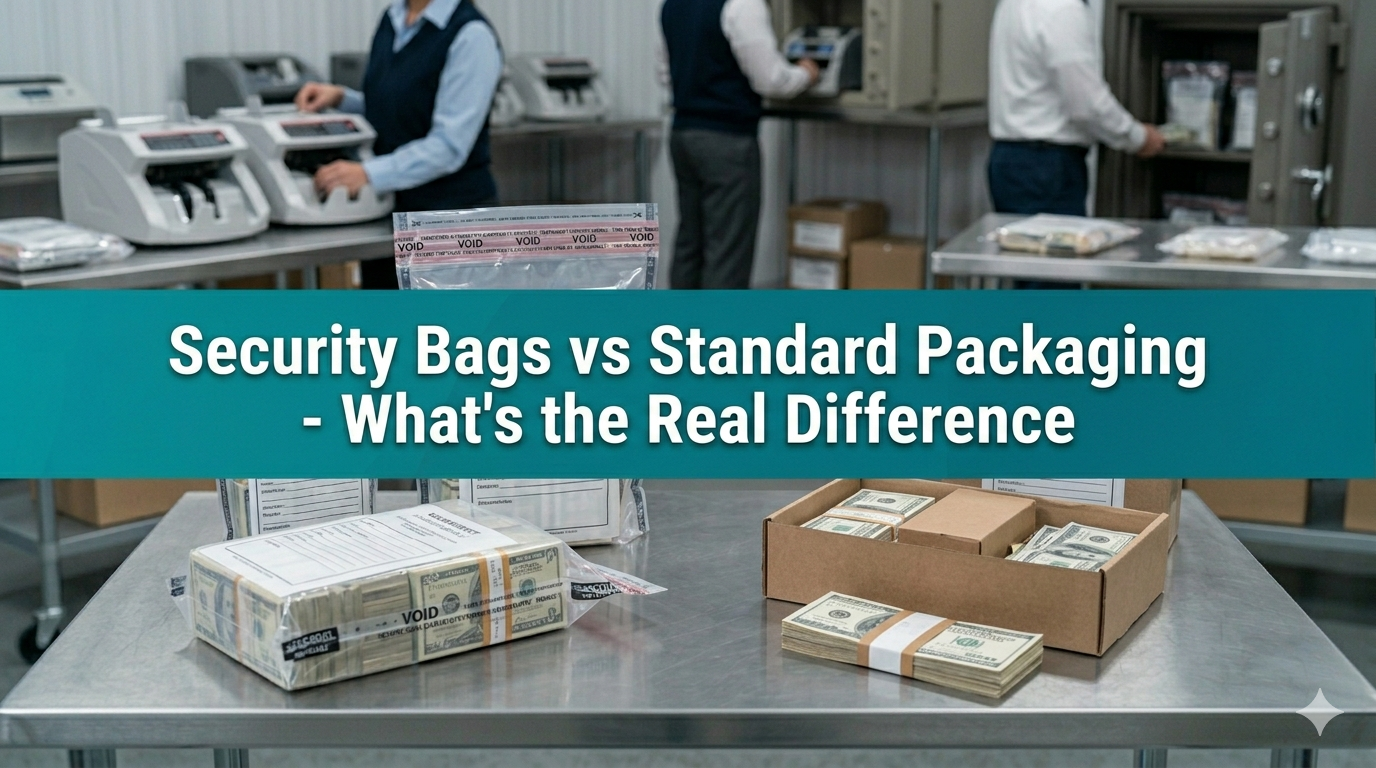
Security Bags vs Standard Packaging – What’s the Real Difference?
In industries where trust, safety, and accountability are non-negotiable, the type of packaging used can directly impact operations. Whether it’s banking, retail, logistics, or e-commerce, businesses today are moving beyond basic packaging solutions and adopting more secure alternatives. This is where the debate around security bags vs standard bags becomes highly relevant.
At Dhwani Polyprints, the focus has always been on creating packaging solutions that align with modern business risks and operational demands. While standard packaging may suffice for general use, security bags are designed with a very different purpose in mind, protection, traceability, and tamper evidence.
Understanding Standard Bags in Packaging
Standard packaging bags are the most commonly used form of packaging across industries. They are designed for convenience, storage, and transportation of goods, without any advanced security features. These bags are typically made from plastic or similar materials and are widely used for retail carry, product packaging, and general logistics.
When exploring what is the difference between security bags and standard bags, it’s important to first recognise that standard bags focus primarily on functionality. They are lightweight, cost-effective, and suitable for everyday packaging needs. However, they do not provide any mechanism to detect tampering, unauthorised access, or product interference.
For businesses handling low-risk goods, standard bags may be sufficient. But in sectors where cash, confidential documents, or valuable items are involved, the limitations of standard packaging become evident.
What Are Security Bags and How Do They Work?
Security bags are specialised packaging solutions designed to protect contents from tampering, theft, and contamination. Unlike regular packaging, these bags are engineered with tamper-evident features that make any unauthorised access immediately visible.
The rising demand for security bags for packaging comes from industries that require a higher level of accountability. Banks, courier services, hospitals, and government organisations rely on these bags to maintain integrity across the supply chain.
Security bags often include features such as irreversible sealing mechanisms, unique identification numbers, barcodes, and specialised adhesives. Once sealed, the bag cannot be opened and resealed without leaving visible evidence. This ensures that any breach is easily detectable, reducing the risk of unnoticed tampering.
Key Differences Between Security Bags and Standard Bags
When comparing security bags vs standard bags, the differences go far beyond just material or appearance. The fundamental distinction lies in purpose and performance.
Standard bags are built for convenience, while security bags are built for protection. Standard packaging does not provide any feedback if it has been opened or altered. In contrast, security bags are designed to clearly indicate any form of tampering.
Another important aspect in understanding what is the difference between security bags and standard bags is traceability. Security bags often come with serial numbers or tracking systems, allowing businesses to monitor the movement of sensitive items. Standard bags, on the other hand, offer no such tracking capabilities.
Durability also plays a role. Security bags are typically made from multi-layered materials that resist tearing and puncturing, making them suitable for high-risk environments. Standard bags may not withstand the same level of handling or stress.
Why Are Security Bags Better Than Standard Bags?
The growing shift towards secure packaging is driven by the need to minimise risk and improve operational transparency. This is where the question of why are security bags better than standard bags becomes critical.
Security bags provide an added layer of protection that standard packaging simply cannot offer. They help prevent internal and external theft, ensure the integrity of contents, and build trust between businesses and their customers.
In industries like banking and cash handling, even a minor breach can lead to significant financial and reputational damage. Security bags act as a deterrent against such risks by making tampering highly visible and difficult to execute.
Moreover, security bags support compliance with industry regulations. Many sectors require documented proof of secure handling, and these bags provide a reliable way to meet those standards.
The Growing Preference of Security Bags for Packaging
As businesses evolve, so do their packaging requirements. The preference of security bags for packaging has increased significantly due to rising concerns around safety, accountability, and operational efficiency.
Modern supply chains are complex, often involving multiple touchpoints before a product reaches its final destination. In such scenarios, ensuring that the contents remain untouched is crucial. Security bags offer that assurance.
Midway through this shift, companies like Dhwani Polyprints are enabling businesses to adopt packaging solutions that align with both safety standards and scalability. By offering customisable and high-quality security bags, they are helping organisations move towards more reliable packaging systems.
Another reason for this growing preference is brand credibility. When customers or stakeholders see that a business uses tamper-evident packaging, it reinforces trust and professionalism. It signals that the company values security and takes proactive measures to protect its assets.
Applications Across Industries
The adoption of security bags for packaging is not limited to one sector. Their applications span across industries where safety and traceability are essential.
In banking, they are used for cash deposits and inter-branch transfers. In retail, they help secure high-value items and prevent shrinkage. In healthcare, they ensure that medical samples and documents remain uncontaminated. Logistics companies use them to safeguard parcels and sensitive deliveries.
This wide range of applications highlights the versatility and importance of security bags in modern business environments.
Making the Right Packaging Choice
Choosing between standard packaging and security bags ultimately depends on the nature of the goods being handled and the level of risk involved. For low-value, non-sensitive items, standard bags may still serve their purpose.
However, as soon as the stakes involve financial value, confidentiality, or regulatory compliance, the advantages of security bags become undeniable. Understanding why are security bags better than standard bags helps businesses make informed decisions that protect both their operations and reputation.